TheArtificialFuture.
Over three weeks in Lagos, we are bringing together curious people, working builders, and everyone in between — for a hackathon, workshops, and a conference all answering the same question: what does AI look like when Africans are the ones building it?
 An event by Young People In Tech
A programme built to put young Africans at the centre of AI.
Not as observers, but as builders.
There are a lot of young Africans paying close attention to AI right now. Some are curious, many are ambitious, and a lot of people are already trying to figure out where they fit. However, there are not nearly enough spaces built to actually empower them.
The Artificial Future is trying to be a space that empowers these people. If this resonates, join us.
Over several weeks, you will take part in workshops that build real skills, collaborate with others in a live hackathon, and join a conference where Africa's most ambitious thinkers share what they are seeing and building. Active participation involves learning, building, and exposure. All of it is connected.
Open to everyone.
Whether you are a student, a developer, a founder, a researcher, a policy maker, or an investor — you belong here. You do not need to arrive as an expert. We have found that since 2022, across every event we have run, the most interesting things happen when you put curious, ambitious people in the same room together. This is that room.
Three distinct experiences.
One connected programme.
The Workshops
Practical sessions led by people building at the forefront of AI. Expand your view of what is possible — whether you are in the hackathon or just here to learn.
See Schedule →The Hackathon
A full week to build something that did not exist before. Pick a challenge, build a team, and work on it with mentors you can actually talk to.
View Tracks →The Conference
A full day of talks, panels, and conversations with leading voices in AI from across Africa and beyond. Open to anyone — no hackathon participation required.
Get Tickets →These workshops will expand your ambition.
Feel free to leave with it.
Led by people living day-to-day as AI builders. Online. Free.

AI at work: A PM's practical guide
Subomi Salami
Subomi is a Senior PM at Microsoft AI and she's been figuring out, in real time, what it means to manage AI products and use AI to do her job better. In this session, she shares the honest account of that journey, including the tools she uses daily, the skills she's building, and how to think about evaluating AI output.

A Deep Dive into MCPs: What They Are, What They Unlock, and How to Use Them
Andrew Nduati
MCPs are one of the most important shifts happening in AI right now, and most people have no idea what they are. Andrew breaks it down using Paystack's MCP server as a live, real-world example, showing what MCPs unlock and how to think about building with them.

The DIY Stack: Personalized Software in the Age of AI
Jeremiah Nnadi
In this session, I'll show how you can now design, prototype, test, integrate, and ship your own tools. The space is so matured that you can create software built for your goals, running on a stack you actually own and operate. Using a personal finance app I built (Kolo) as a case study, we'll walk through each stage of the build: turning an idea into a designed interface, a working prototype, tested code, real data integrations, and a maintained product (with AI at most steps). The goal isn't to teach you to build a finance app. It's to show what's possible when you stop outsourcing software to other people. You don't need a team, a big budget, or a traditional engineering background. All that's really essential is a problem you care about, a careful process, and a willingness to actually interact with technical workflows.

AI-assisted development: Principles for building in the age of AI
Nkechi
Before you jump into randomly prompting Claude or Lovable, you need to get your foundation right. This session gives you the framework for using AI to augment your ability to build — covering spec-driven development workflows, patterns for interacting with AI tools, and how to think about your role as a builder in the age of AI.

Exploring Agents: How to build them safely — from infrastructure to impact
Bola Banjo
Agents are the next frontier in AI but building them safely is hard. Bola walks through what makes agents powerful, what makes them risky, and how Cencori's infrastructure approach lets builders create safe, scalable agents without reinventing the wheel.

Bridging the Data Skills Gap for African Languages
Tonative Data Academy
African languages are underrepresented in AI because the training data simply doesn't exist at scale yet. This workshop changes that, starting with you. Led by tutors from the Tonative Data Academy, you'll learn how the data gap came to be, what it means for AI systems in African contexts, and how to personally contribute. You'll leave with practical skills to curate your own language dataset and publish it for use in AI model training and evaluation. No prior technical background needed — if you speak an African language or care about how it's represented in AI, this session is for you.

Design in the Age of AI: How to Build Things That Look Good and Actually Work
Uche Onyeka
Most people think design is something you either "have an eye for" or you don't. That's not true anymore. Uche walks through how designers and non-designers alike can use AI to think through problems, generate interfaces, prototype ideas, and ship things that feel intentional — using real examples from his own projects. The goal isn't to turn you into a designer. It's to show that in 2026, the gap between an idea and a product that looks real is smaller than you think.
Beyond WER: Nuanced Evaluation Metrics for African Speech Models
Bunmi Akinremi · PyData Lagos
WER is the standard metric for evaluating speech models — but it regularly misjudges real-world quality when models meet African accents, dialects, code-switching, and noisy environments at scale. Bunmi walks through what breaks down and why, then introduces production-grade evaluation approaches that actually reflect user experience: semantic correctness, error severity weighting, task success, and monitoring for drift over time.
Problem areas,
not prescriptive
briefs.
Helping to make money reach more people.
Fintech in Africa is not a solved problem. There are still processes that need to be optimised for scale, people without bank accounts, informal traders outside financial infrastructure, and legacy institutions sitting on data AI could help unlock.
AI that actually speaks the way Africans speak.
Most AI tools were not built with Yoruba, Igbo, Hausa, Pidgin, Swahili, or Arabic in mind. Build something genuinely useful to people in their own language.
Learning on a continent where access is unequal.
Inconsistent connectivity. Overstretched teachers. Learners who need to work while they study. Build tools designed around real African constraints.
Healthcare that works around African infrastructure.
Hospitals that cannot always be relied on. Supply chains under pressure. Communities where care does not reach. Build around weak infrastructure — not despite it.
A format that gives you
time to build something real.
Designed across two full weekends so you can go through the motions like real builders. In-person sessions take place across Lagos — exact requirements for each day are listed below.
Opening Ceremony + Team Formation
Kick off, meet your team, and get building.
Bring a valid ID card. Be ready to provide your name and phone number by Wednesday May 27th.
Build Sprint
Focused building time to get your prototype off the ground.
Download the Cafe One app, get onboarded on the YPIT Channel, and pay a 50% discounted workspace rate of ₦3,000 (excl. VAT).
Build Week & Mentor Sessions
Heads-down building with structured mentor support.
Provide your name at entry.
Build Week & Mentor Sessions
Keep building. Mentors are on hand.
Just show up and build.
Deep Build
The final push before closing. Make it count.
Closing Ceremony
We wrap up the build week together and look ahead to Demo Day.
Submissions
Final submissions due. Polish your project and send it in.
Demo Day & Conference
Top teams present live. Awards, panels, and the full Artificial Future Conference.
A day that actually matters.
The Artificial Future Conference is a standalone day of talks, panels, and conversations about the state and future of AI in Africa and globally. Curated to be genuinely useful — not just inspirational.
We will also be showcasing the most ambitious Hackathon projects. The best teams present in front of a live audience, and we will award prizes and crown a winner on the day.
Open to anyone. You do not need to have participated in the hackathon to attend. Tickets are paid and capacity is limited.
Get Conference Tickets →Conference Details
June 13, 2026
Venue
The Civic Centre, Lagos Island, Nigeria
Main Stage
Keynotes from leading voices in African AI
Breakout Sessions
Workshops, roundtables, and panels
Demo Day
Top hackathon teams pitch live — YC-style
Networking
Dedicated breaks and closing reception
What it actually takes to build AI in Africa
Data, infrastructure, applications, and policy — how the verticals work together, or don't.
From Next Token Prediction to AI Agents
A technical journey through the history of AI, the key breakthroughs behind modern language models, and how they evolved into today's agentic systems.
Ayomide Odunmakinde · Member of Technical Staff, Cohere
The realities of building AI businesses for Africans
Local founders building AI-first businesses share what the journey actually looks like.
Investing in Africa's AI Future
Founders, angels, and institutional investors on funding the ecosystem.
Hackathon Showcase
Top teams present to a live audience of investors, corporates, and community. Judges deliberate.
Awards Ceremony
Prize announcements including named award categories from headline partners.
We are putting together
an exceptional group of people.

From Next Token Prediction to AI Agents
Ayomide is a member of technical staff at Cohere where he is working on agents and reasoning models. He was previously a research scholar at Cohere Labs, contributing to advancing large language models — with his most recent work focusing on optimising the training of compact, high-performance multilingual models.
He also has experience working on video and audio understanding. In his spare time, he plays a lot of video games.
Announcing soon
Announcing soon
Announcing soon
Announcing soon
Announcing soon
People in your corner
for the full two weeks.
Our mentors bring real-world experience across AI engineering, product, research, and business. They're here to help you think clearly, build faster, and go further.
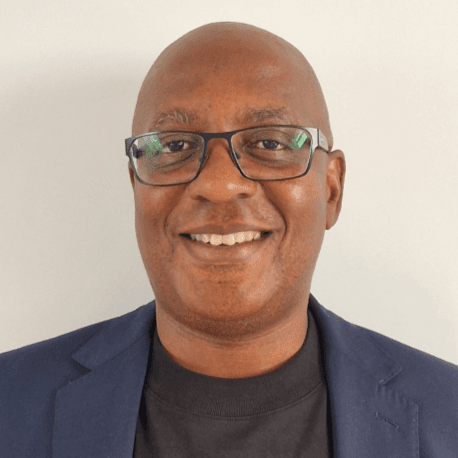
Pearce Mutendera
Chief Technology Officer · Synergya.io


Adebusayo Adewunmi
AI System Architect, Team Lead Data & AI · Infinion Technologies

Oluwadarasimi Olowookere
ML Research Engineer · Intron Health

Aaron Sotunde-Adesina
Co-founder & Business Lead · Quonos


Odunola Jenrola
AI Engineer · Awarri

Abisola Aderohunmu
AI Product Manager · Heala Tech
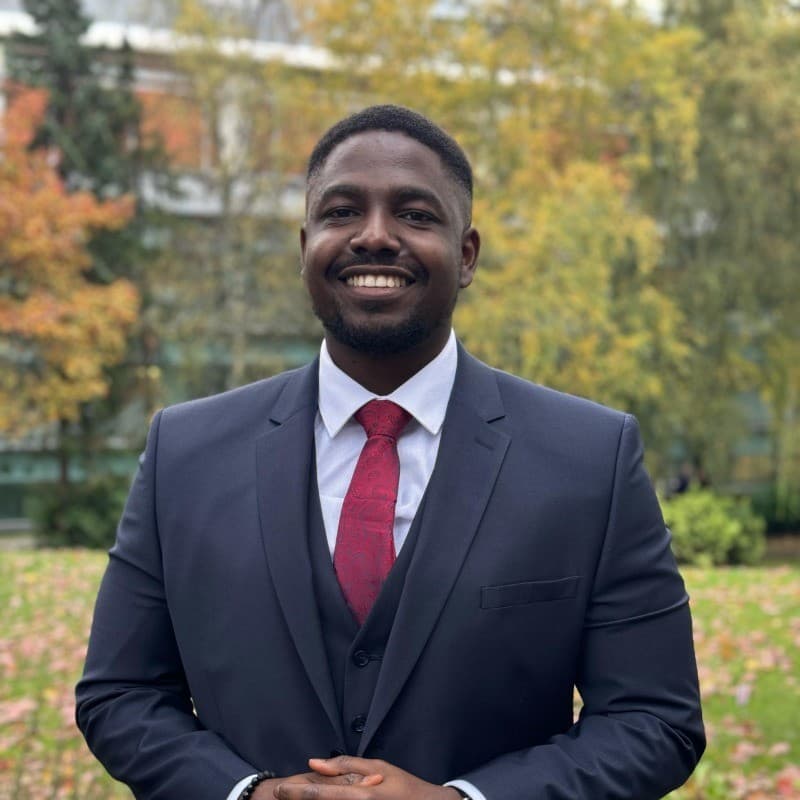
Lolade Ilori
Frontend Engineer · African Fintech Foundry

Bunmi Akinremi
AI/ML Engineer & Lecturer · Pan Atlantic University

Ojurereoluwa Daniel Oreofe
Co-founder · Cencori
Three ways to get involved.
Find the path that fits you — we hope one does, no matter who you are.
Hackathon + Workshops
- 01Register using the form on this page
- 02Receive confirmation with everything you need
- 03Form or join a team, sign up for workshops, book mentors
- 04Show up May 30 with your laptop and curiosity
Workshops Only
- 01Register using the link below
- 02You'll get redirected to YPIT's Luma page
- 03Sign up to all workshops that pique your interest
- 04Subscribe to the Luma calendar to receive updates
Conference Only
- 01Purchase a conference ticket via the ticketing page
- 02Your ticket covers the full conference day on June 13
- 03No separate hackathon registration needed
- 04Show up at The Civic Centre, Lagos Island
If you want to be here and you are willing to learn — you are in.
We are not trying to find the people who are already good at this. Students, developers, founders, researchers. Experts and total beginners. Some of the best things get built by people who had no idea what they were capable of on day one.
You do not need a team to register.
Register solo and we will help you find teammates during the opening session. Teams are between 2 and 4 people. The hackathon and workshops can be joined remotely from anywhere in the world.
Everything you need to know.
The organisations making
The Artificial Future possible.
We are grateful to the partners who believe in what we are building. More announcements coming soon.











Interested in partnering with The Artificial Future?
Capital, technology, utility, and people partnerships available.